
How To Order Dim Sum In Cantonese

Author
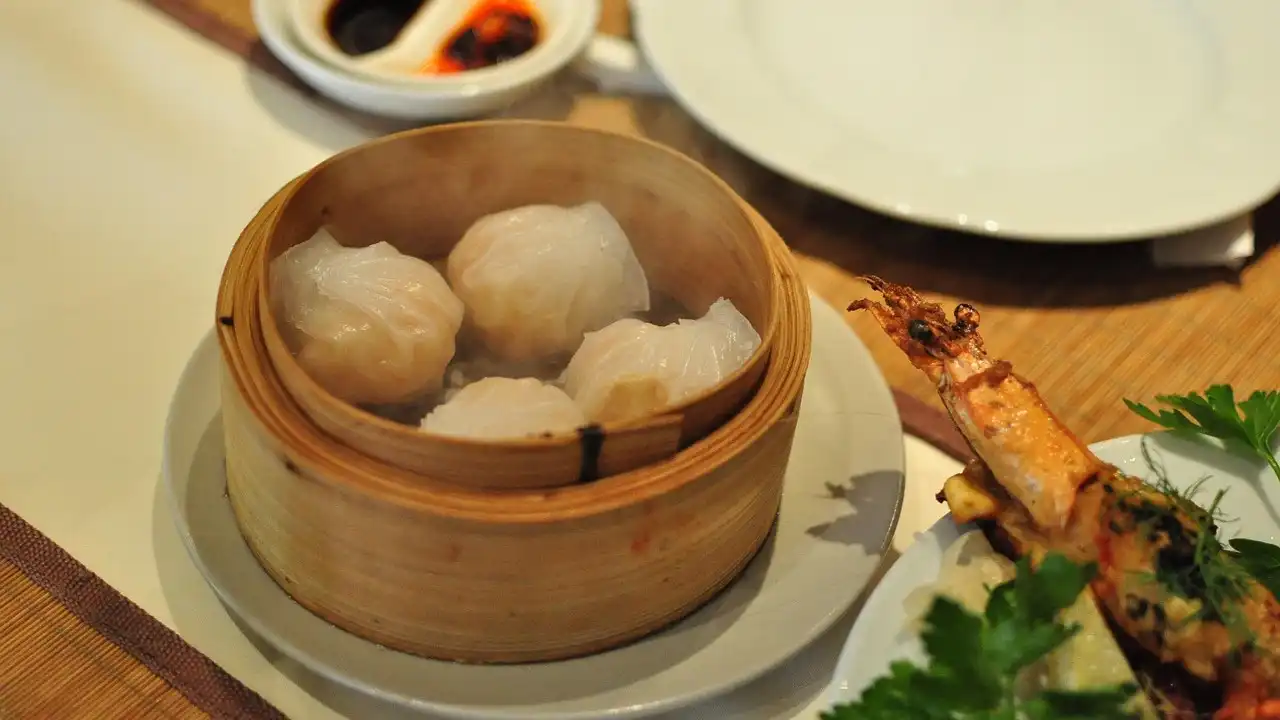
If you’re learning Cantonese, there is one part of our cuisine you simply can’t miss: Dim Sum.
Going to a dim sum restaurant is about more than just food.
It’s a loud, chaotic, and delicious tradition. In Cantonese, we actually call this activity yum cha (飲茶), which literally means “drink tea.”
However, for a beginner, walking into a busy Hong Kong tea house can be overwhelming.
Waiters are shouting, carts are flying by, and everything moves very fast.
But don’t worry.
I’ve taught many students how to survive this experience. You don’t need perfect grammar. You just need a few key phrases and to know the names of the dishes you want to eat.
In this guide, I’ll teach you exactly how to get a table, how to order your favorite dumplings, and the secret etiquette rules that will make you look like a local.
Table of Contents:
Getting a table and picking tea
When you first walk into a restaurant, the host will ask you how many people are in your group.
They will usually shout:

幾多位?
You can answer simply with the number and the polite particle wai2 (which is a polite measure word for people).
兩位
四位
Once you sit down, the very first thing the waiter will ask is what tea you want to drink.
Remember, we call this activity yum cha (drink tea), so the tea is mandatory! If you don’t choose one, they might get impatient.
There are three main types of tea that are safe bets for beginners.
1. Pu’er (Bo Lay): A dark, fermented tea. It is strong and good for digestion after eating greasy food. This is the most popular choice for locals. 2. Jasmine (Heung Pin): A flowery, lighter green tea. 3. Chrysanthemum (Guk Fa): A sweet, herbal tea made from flowers (no caffeine).
Here is how you order it:
唔該,普洱
唔該,香片
The secret finger tap etiquette
If you want to impress your Cantonese friends, you must learn the “finger tap.”
When someone pours tea for you, you do not need to say “thank you” out loud, especially if you are in the middle of a conversation. Instead, you tap your fingers on the table.
How to do it:
Take your index and middle finger (and sometimes your ring finger) and tap the table two or three times near your tea cup.
Why do we do this?
There is a legend that the Qing Dynasty Emperor Qianlong used to travel in disguise as a commoner. When he poured tea for his servant, the servant wanted to bow to show respect. However, bowing would reveal the Emperor’s identity.
So, the servant bent his fingers on the table to imitate a person bowing.
Today, it is just a silent way to say m4 goi1 (thank you) without stopping the conversation.
How to order food
In traditional places, ladies push trolleys (carts) around the room. In modern restaurants, you might scan a QR code or tick boxes on a paper sheet.
If you are in a place with trolleys (which is the most fun!), you can simply point. But it is better to speak.
The most useful phrase you will learn today is yiu (to want).
我要呢個
我要一籠蝦餃
Notice the word lung4? This is the measure word (classifier) for “steamer basket.” Since most dim sum comes in bamboo steamers, this is a very useful word to know.
If the food is not in a basket (like fried noodles), you can use dip6 (plate).
一碟炒麵
Essential dim sum vocabulary list
You can’t order if you don’t know what to eat!
There are hundreds of dishes, but here are the “Big Four” and a few other classics that you will find in every restaurant from Hong Kong to London to Vancouver.
| English Name | Cantonese | Jyutping | Description |
|---|---|---|---|
| Shrimp Dumpling | 蝦餃 | haa1 gaau2 | Translucent skin filled with shrimp. The king of dim sum. |
| Pork Dumpling | 燒賣 | siu1 maai2 | Yellow wrapper open at the top, filled with pork and shrimp. |
| BBQ Pork Bun | 叉燒包 | caa1 siu1 baau1 | Fluffy white bun filled with sweet roasted pork. |
| Rice Noodle Roll | 腸粉 | coeng2 fan2 | Silky rice noodles rolled up, usually with shrimp or beef inside. |
| Chicken Feet | 鳳爪 | fung6 zaau2 | Steamed chicken feet in black bean sauce. Don’t be scared, it’s delicious! |
| Spring Rolls | 春卷 | ceon1 gyun2 | Fried crispy rolls with vegetables and meat. |
| Egg Tart | 蛋撻 | daan6 taat1 | Sweet custard in a flaky pastry shell. |
Asking for the bill
When you are full and ready to leave, you need to get the bill.
In Cantonese culture, getting the waiter’s attention requires confidence. Do not be shy. Raise your hand slightly and say:
唔該埋單
A common hand gesture that goes with this is holding your hand up and pretending to write or scribble on the air. Every waiter in a Chinese restaurant understands this sign immediately.
Ordering dim sum is one of the best ways to practice your Cantonese because it is repetitive.
Remember these three steps:
- Pick your tea (Bo Lay is the safest choice).
- Use the “finger tap” when someone pours for you.
- Say ngo5 yiu (I want) + the food name.
Don’t worry if you make a mistake. The staff are usually very busy, but they appreciate it when you try to speak their language. Plus, even if you order the wrong thing, it will probably still taste amazing.